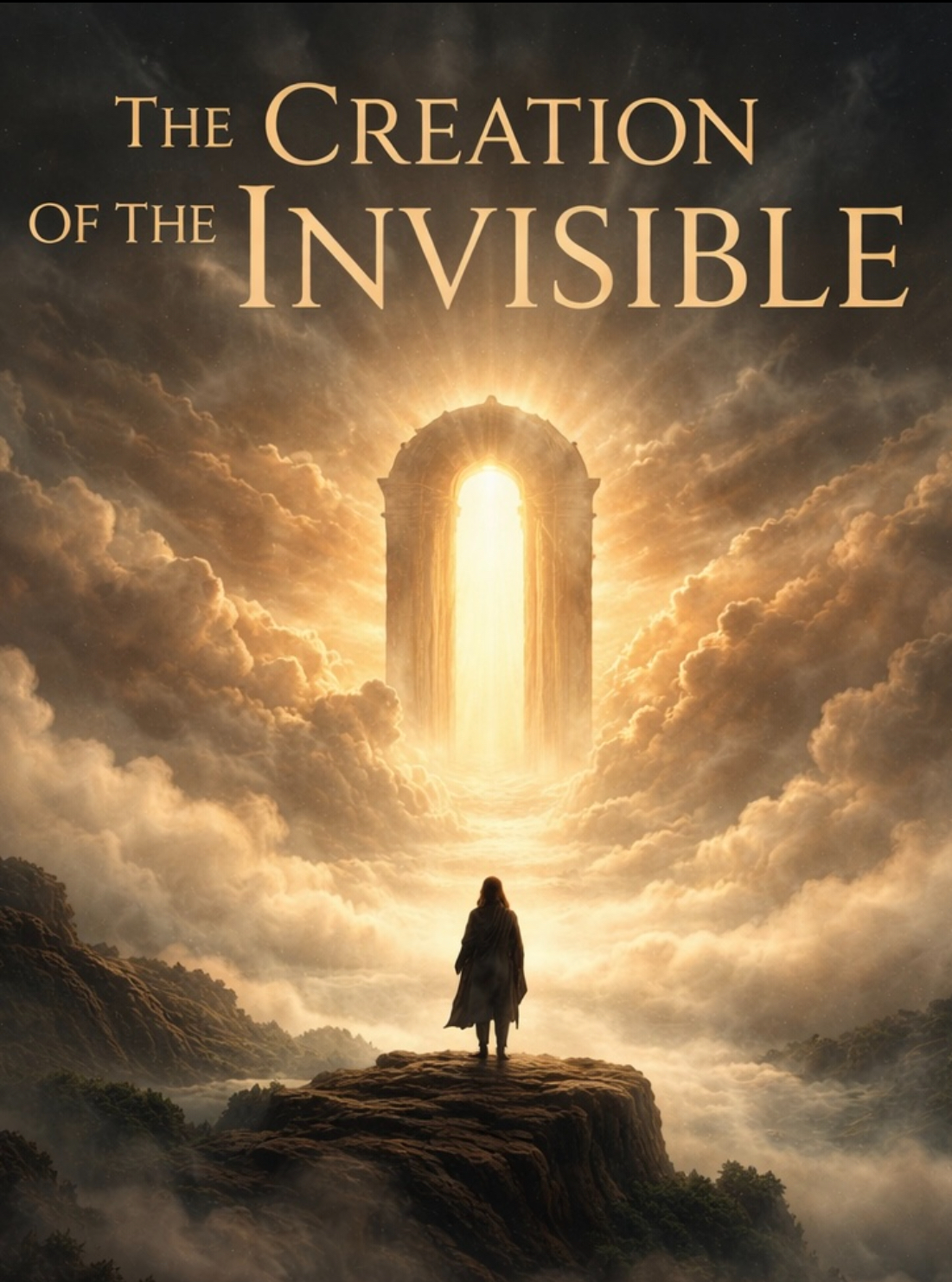
The Walls of Theology to Reality
There is a pattern that becomes hard to ignore once you see it.
When something is real, it can be tested. It can be questioned. It can be proven wrong.
And that is exactly the problem.
If a belief claims to describe reality, then reality has the right to answer back. If it fails, the belief collapses. So instead of risking collapse, something else is created—something untouchable.
Something invisible.
Truth is moved into a place where it cannot be examined. A place “beyond understanding.” A place where questions no longer reach.
And in that place, it becomes safe.
Because you cannot disprove what you are not allowed to touch.
The Death of Critical Thinking
This is where the shift becomes more serious.
It is not just that logic is avoided. It is slowly redefined as dangerous.
Doubt, which is the beginning of learning, becomes a threat. Questions become signs of weakness. Curiosity becomes something to suppress.
And in its place, a new virtue is introduced—faith.
Not faith as trust built on understanding, but faith as belief without the need for understanding.
When this happens, language itself begins to lose its grounding.
Words like Father, Justice, Love, Abandonment—these are words we understand through real human experience.
But once they are placed inside “divine mystery,” their meaning starts to shift.
A father can act in ways no father should. Justice can contradict what we know as fairness. Love can coexist with suffering without explanation.
And when meanings keep changing, you lose your ability to measure truth.
If the scale itself is unstable, nothing can be weighed.
The Wall Between Theology and Reality
Without layers of interpretation, reality is simple.
If a person suffers and cries out, “Why have you forsaken me?” we recognize something immediate.
Pain. Confusion. Abandonment.
We respond with empathy. We look for causes. We try to understand.
But when theology steps in, something changes.
That raw human moment is no longer allowed to stand on its own. It is filtered. Interpreted. Reframed.
What was once a cry of pain becomes a “fulfillment.” What was once human becomes symbolic.
And slowly, the weight of the moment is replaced by explanation.
Not understanding—just explanation.
The Prison of Mystery
At this point, something deeper is formed.
If truth is hidden behind mystery, then someone must explain the mystery.
And now, the individual is no longer enough.
You need interpreters. You need authorities. You need those who claim to understand what cannot be understood.
Because the truth is no longer something you can see directly. It is something you must be guided toward.
And that is where the separation happens.
If truth remained simple—if language remained grounded in real human meaning—you would not need a system to reach it.
You would recognize it.
But once mystery becomes the standard, truth is no longer accessible.
It becomes controlled.
The mystery is not just a gap in understanding.
It becomes a barrier.
A quiet distance placed between a human being and the truth they are trying to find.
Final Reflection
There is nothing wrong with what we cannot yet understand.
But there is something dangerous when the unknown is used as protection from being questioned.
Because truth does not fear examination.
Only something fragile does.
And the moment we are told that we must stop asking in order to believe—that is the moment we should begin asking even more.
Comments