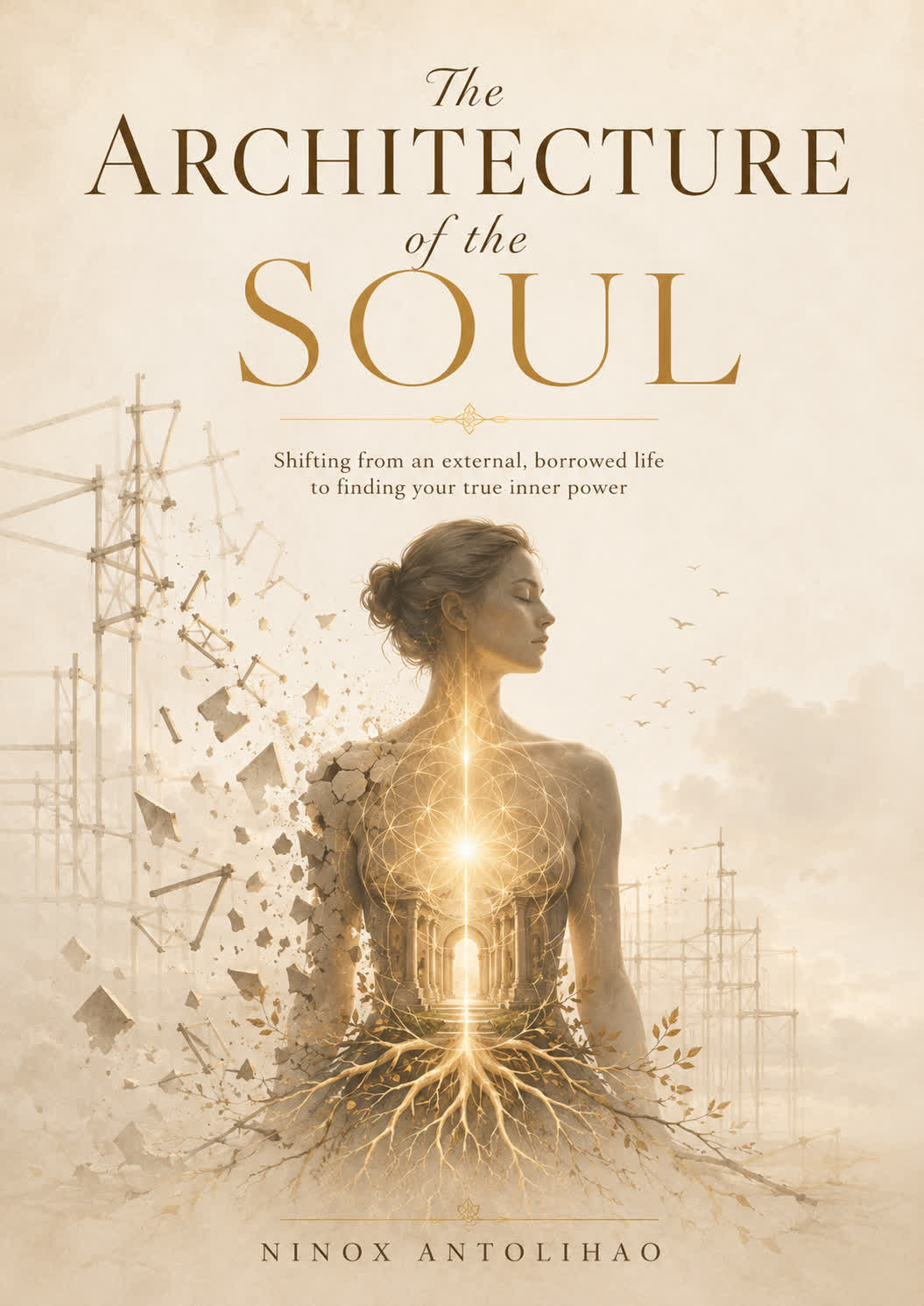
The Architecture of the Soul
For much of human history, the easiest path through life has been the one already paved by others. We are born into ready-made structures—religions, cultural expectations, and societal scripts—that hand us a blueprint for how to think, what to value, and who to be. It is a comforting arrangement. By following the blueprint, we receive immediate belonging, approval, and a sense of safety. But this comfort comes at a hidden, steep price: the systematic abandonment of our genuine selves. Looking back at the moments where I have felt most lost, I realize they did not stem from external failures, but from the realization that I was living a life that was merely a copy of someone else’s.
The danger of relying entirely on external structures, whether they are dogmatic institutions or the expectations of those around us, is that they act as a spiritual and psychological scaffold. A scaffold is incredibly useful when building a structure, but it is never meant to become the structure itself. When we rely on something outside of ourselves to define our worth and dictate our truth, we remain fragile. As soon as that external pillar shakes—whether through a crisis of faith, the loss of a guiding figure, or a world-altering event—we fall with it.
We collapse because we never took the time to build our own internal foundation. We were taught to look upward and outward for strength, completely missing the fact that the reservoir of our own agency and intuition was drying up from neglect.
Living as a copy is an exhausting, hyper-vigilant performance. It requires wearing a psychological mask, constantly checking the script to ensure the character we are playing matches what our audience expects. The tragedy of this performance is that even when it succeeds, it leaves us entirely empty. When people applaud a copy, the praise never reaches the person inside; it stays on the surface, feeding the costume while starving the soul.
True fulfillment, I have come to see, cannot be inherited or borrowed. It is a byproduct of self-knowledge: the difficult, often messy process of uncovering our real values, embracing our unique flaws, and standing firmly in our own truth.
To break away from the template and discover the genuine self is not an act of selfishness; it is an act of survival. A genuine self is forged not in moments of easy conformity, but in the quiet courage it takes to ask: Who am I when no one is watching?
When we find that inner core, our relationship with the world changes. We no longer treat life as a series of obligations to appease an external authority, but as a space to express our inherent power. We become resilient. When the storms of life arrive and the external scaffolds inevitably fall away, the authentic individual remains standing—not because the storm spared them, but because their roots are finally their own.
Ultimately, this reflection brings me to a deeper understanding of what it means to be fully human. We are not meant to be assembly-line duplicates of past generations or rigid doctrines. The greatest journey we can take is the inward turn: moving away from the dependency of looking outside for answers, and stepping into the quiet, unshakeable power of knowing exactly who we are.
The Broken Mirror
To understand how certain religious systems can prevent us from knowing our genuine self, we must look at how institutionalized, dogmatic religions often rely on structures that actively direct our attention away from our internal world.
If we are taught from childhood that our natural instincts, desires, and thoughts are untrustworthy or evil, we learn to fear our inner world. Instead of looking inside to understand who we are, we suppress our intuition. We stop looking in the mirror because we have been told the mirror is broken.
In rigid religious structures, truth is treated as something that has already been discovered, written down, and locked in place. This creates a habit of psychological outsourcing. If we have an ethical dilemma or a deep life question, the instruction is not to reflect deeply on our own values, but to consult a text, a priest, or a commandment.
Over time, the muscle of personal discernment and self-trust atrophies. We become passive followers rather than active knowers.
Religion provides an incredibly powerful, pre-packaged identity. It tells us what to wear, how to pray, what to eat, who to marry, and what to believe about the afterlife. Because this identity is so complete, it can swallow up the individual.
It is much easier to absorb a ready-made personality than it is to do the hard, lonely work of forging our own. We become “the Christian,” “the Catholic,” or “the Protestant,” rather than discovering who we are beneath that label.
To keep us from wandering inward and questioning the established script, many systems employ guilt and fear of punishment, either social exclusion in this life or damnation in the next. When we begin to have thoughts or questions that do not align with the religious copy, we experience intense anxiety.
This fear forces us to push those unique thoughts down, hiding our genuine self even from ourselves, just to feel safe and accepted by the group.
By constantly directing our focus upward to a deity or outward to an institution, we are kept so busy appeasing external standards that we never have the silence or the permission required to sit with ourselves and ask: Who am I when the rules are stripped away?
Leave a Reflection
Share your thoughts respectfully. Every reflection becomes clearer when it meets honest conversation.