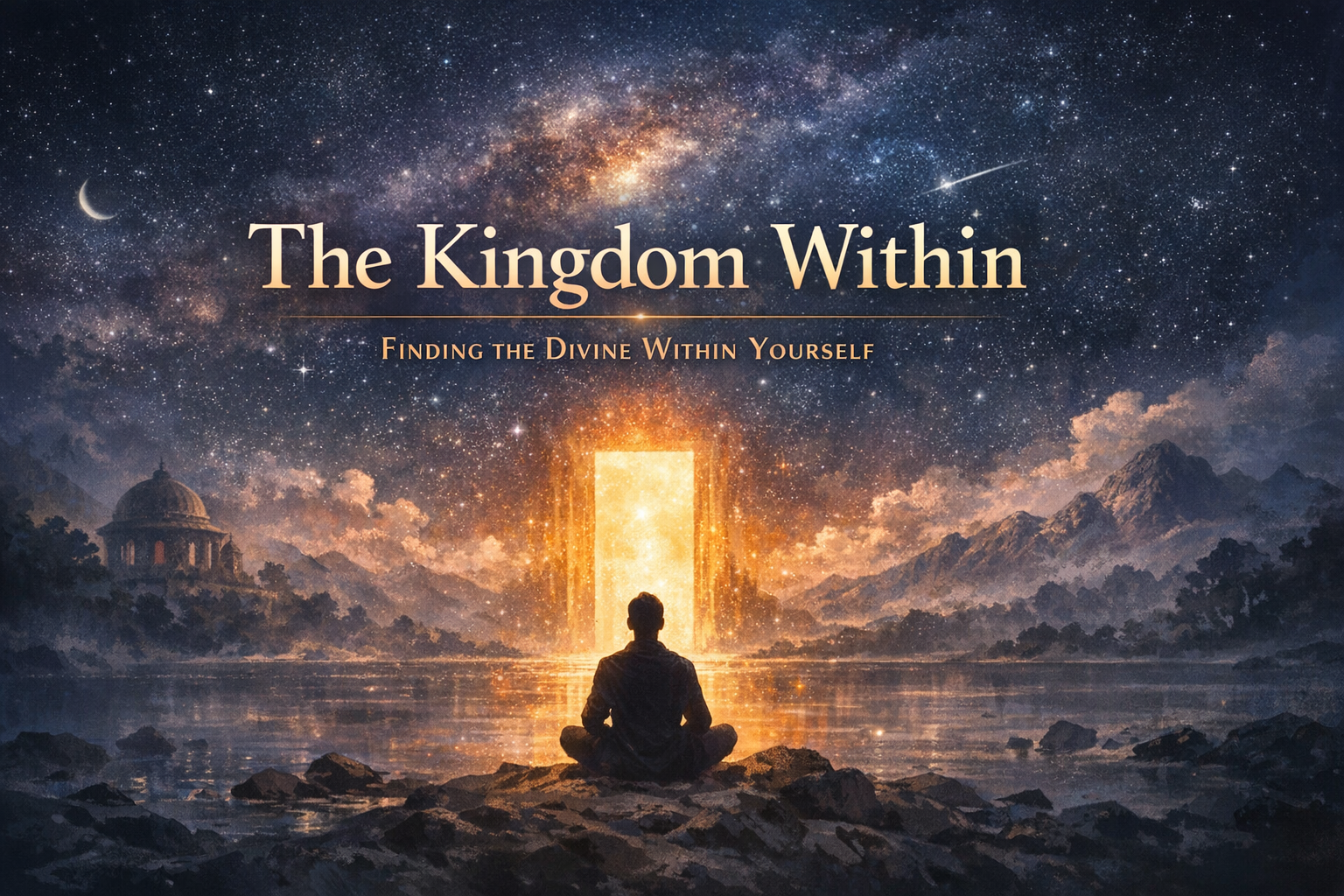
There is a quiet narrative that has echoed through centuries:
That we are nothing.
That we are incomplete.
That we must depend on something outside ourselves in order to survive spiritually.
But pause for a moment and look carefully.
If people truly had no inner light… if they were truly empty vessels… would any religious institution survive without them?
The uncomfortable truth is this: religion, as an institution, depends on people far more than people depend on it.
Institutions draw their strength, their authority, and their continuity from human belief, human participation, and human fear of being spiritually lost. Without followers, structures collapse. Without believers, authority dissolves.
This does not mean all religion is evil. Many traditions preserve wisdom, community, and moral guidance. But institutions — by their nature — tend to protect their own survival.
And survival often prefers dependence over awakening.
Because a person who deeply knows themselves… a person who grows spiritually from within… a person who discovers inner stillness and clarity…
— that person becomes much harder to control.
This is why one of the most radical statements attributed to Jesus still unsettles the world today:
“The Kingdom of God is within you.”
Not in a building.
Not in a hierarchy.
Not locked behind a gatekeeper.
Within you.
If taken seriously, this single line quietly shifts the entire center of spiritual authority. It suggests that the deepest connection to the divine is not mediated by institution, but discovered through inner awakening.
And that is both liberating… and frightening.
Because it removes the comfort of outsourcing our spiritual responsibility.
The deeper challenge, however, is not institutional.
It is human.
People rarely believe something simply because it is true. More often, we believe what feels safe… what feels familiar… what protects our current identity… what aligns with our desires.
Truth demands transformation. Desire prefers comfort.
So even when the treasure is already in our pocket, many still pay others to sell them a map.
Not because the treasure is hidden — but because looking within requires courage.
The real spiritual journey was never about rejecting everything outside us, nor blindly submitting to it.
It is about remembering where the center truly is.
And learning, slowly and honestly, to meet it within.
If the treasure is already in your pocket, you don’t need to pay someone else for a map to find it.